Poorman: A Minimal Postman Alternative
Because of Postman’s bloat, I created something even more terrifying with POSIX shell, curl, and jq: Poorman.
An example:
#!/bin/sh

. ./poorman.sh

GET /users/1
Snapshot

POST /posts --json '
{
  "title": "poorman",
  "body": "A very limited alternative to postman",
  "userId": 1
}
'
Snapshot
GET and POST are just wrappers around curl -X GET/POST, so you can append whatever curl options you need.
Snapshot means “paste the API response here.” The whole script almost looks like some kind of DSL.
DSL-ish
Poorman’s syntax is inspired by ShellSpec: a DSL that is simple, readable, and still flexible. It may not look like one at first glance, but it is still valid shell script.
Design principles:
Request methods are UPPERCASE:
GET,POST,PATCH,PUT,DELETEIt looks clean and familiar.
Configuration values are UPPERCASE:
BASE_URL,DRY_RUNThey feel like environment variables.
Public methods use PascalCase:
CurlOptionOnce,Only,BeforeHookThis separates them from ordinary shell functions, making it obvious that they are Poorman functions.
Private methods use snake_case:
_after_hook,_self_replaceThese are not meant to be called or overridden by users.
Documentation Full of Examples
I like documentation with examples. Whenever I see the output of man blah without examples, I feel sad.
The help text can be extremely detailed and still somehow avoid telling you how to use the thing directly.
That is why almost every function in Poorman’s documentation includes an example.
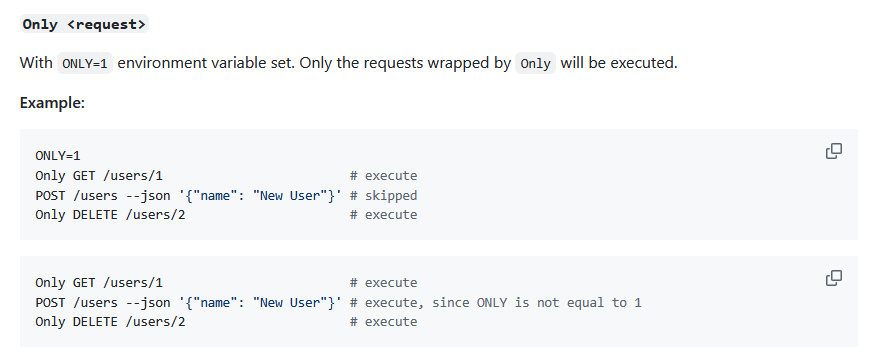
Out of Scope
When I was trying to reproduce some JMeter scripts at $dayjob, I considered adding assertions.
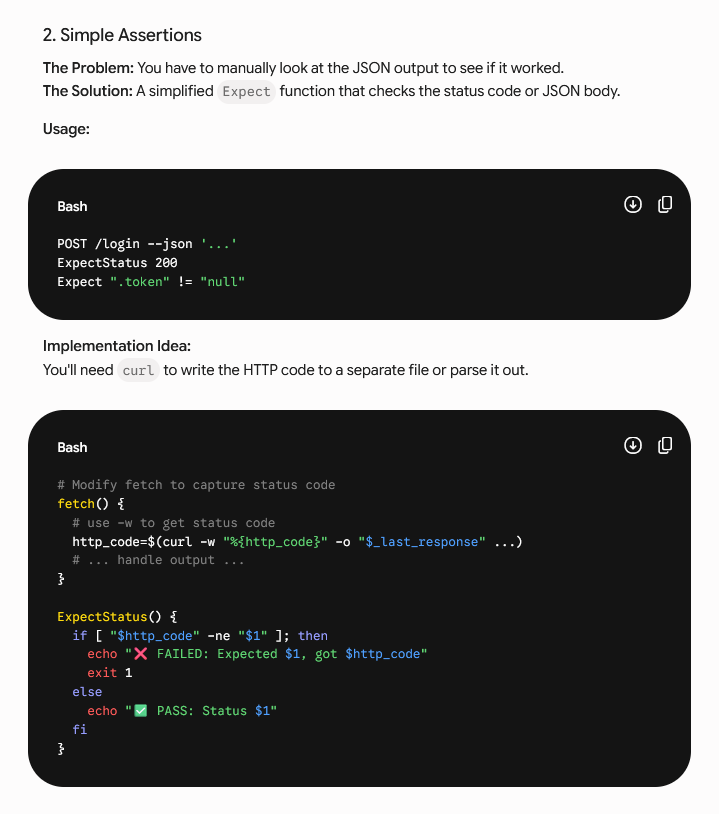
I generated some ideas with AI and got things like ExpectStatus 200 and Expect ".token" != "null".
They sounded cool, so I started implementing those functions.
Halfway through, I realized something was wrong. The edge cases and assertion types would never end. Comparing decimals in shell is already hard enough, so why did I think it was a good idea to implement assertions in shell?
“Every line of code is a debt. The best code is no code at all.1”
A feature nobody needs only adds complexity and makes it harder to maintain. So I gave up and kept the code small (297 lines).
…
A while later, I rediscovered the value of a UI. So I vibe-coded a Python + HTML web UI:
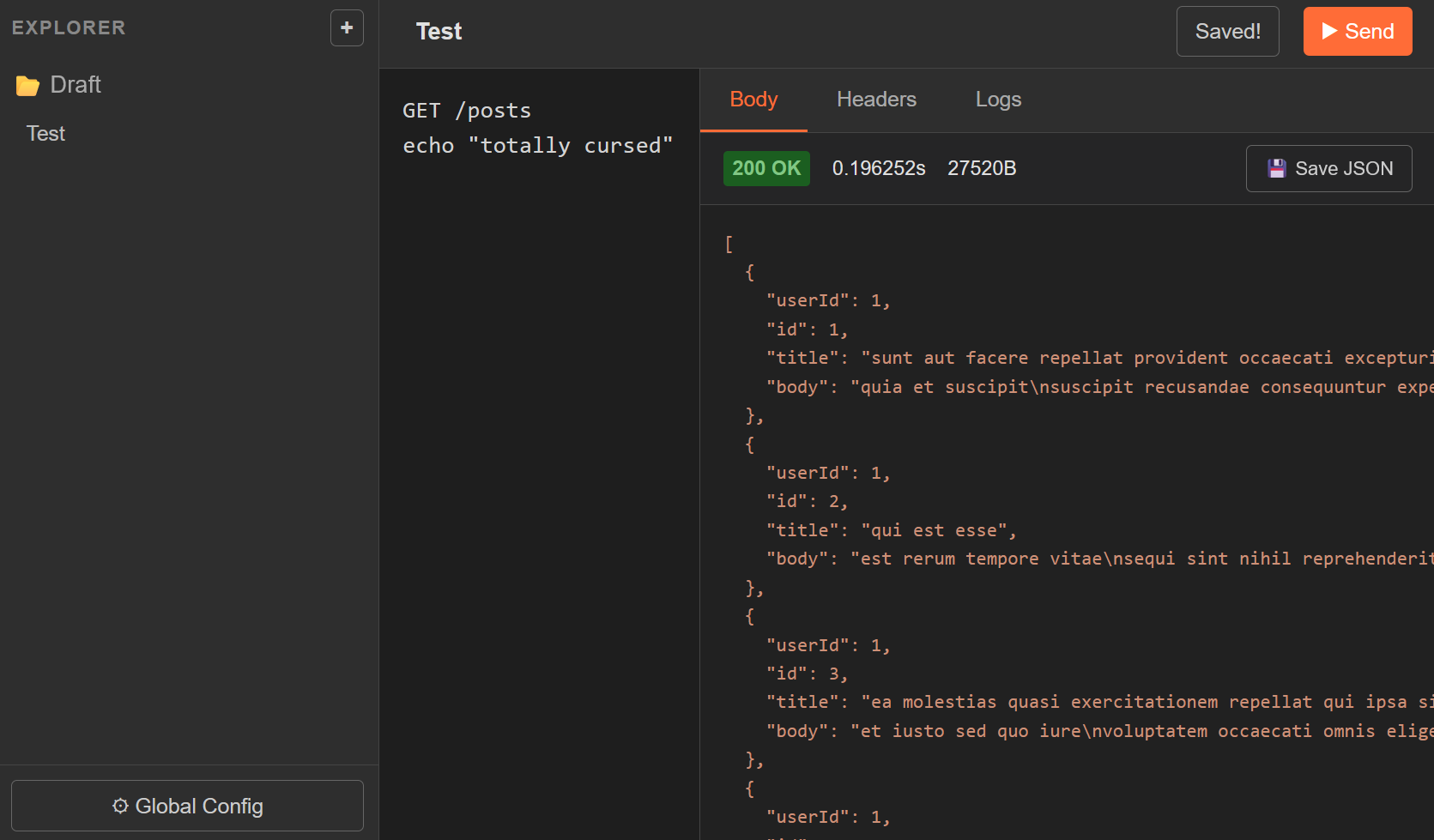
Terrifying. Completely violates the core idea. Bye.